Project Economics
The cost of weight in a noise wall package
NWB Engineering — June 18, 2026 — 6 min read
Project Economics
NWB Engineering — June 18, 2026 — 6 min read
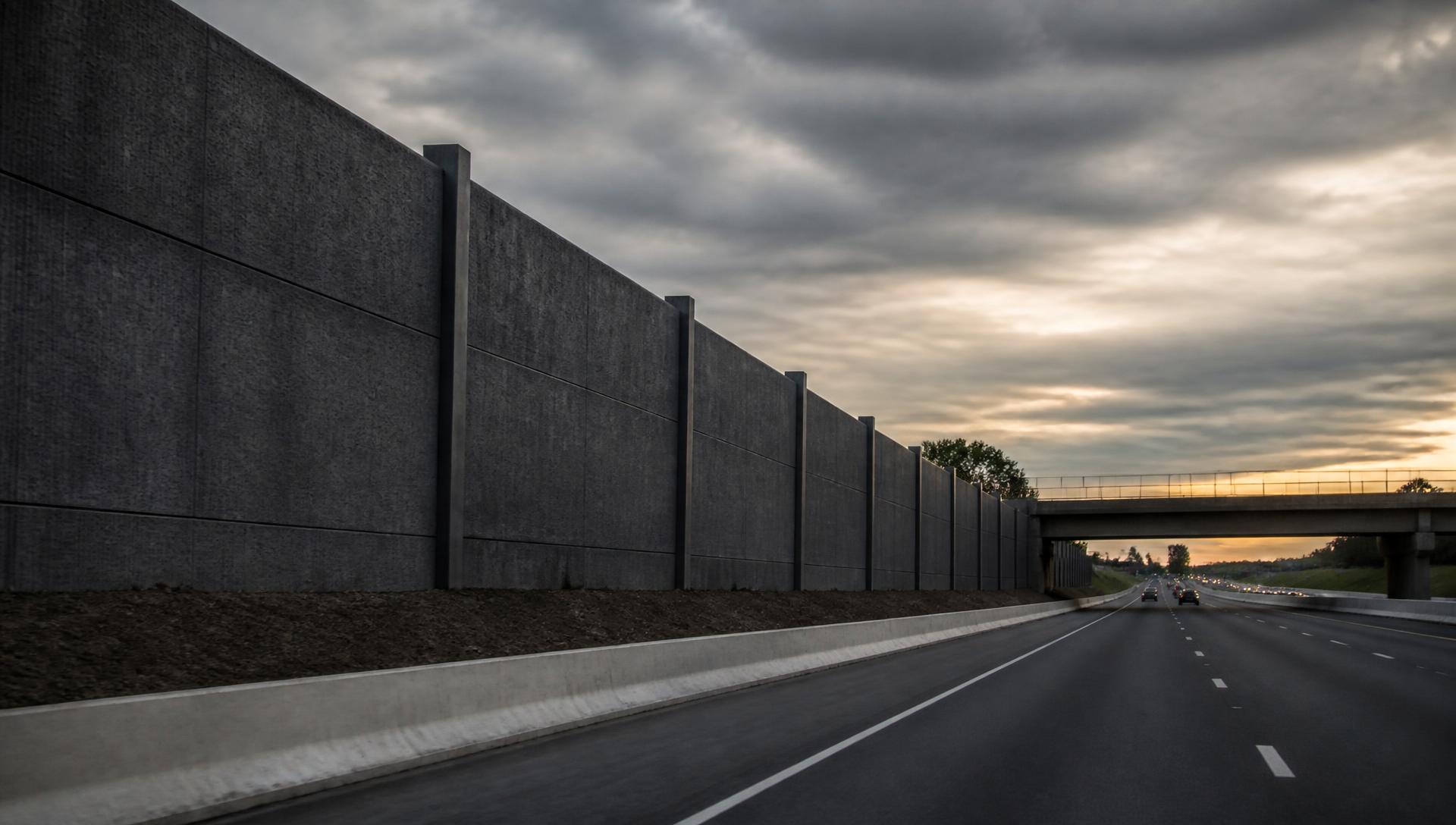
Material price is the most visible number in a noise wall bid and the least complete. Here is how panel weight moves the rest of the estimate.
Noise wall packages are frequently evaluated on a dollar-per-square-foot basis. It is a convenient comparison, and on a long corridor it can be a misleading one. The panel price is the only cost in the package that does not change with weight — nearly everything else does.
Freight is the first place weight shows up. The number of loads required to deliver a wall is a function of panel weight and geometry, not linear feet. Fewer loads mean fewer trucking days, fewer deliveries to coordinate inside a work zone, and less staging area to secure.
Equipment is the second. Panel weight determines the class of machine required to place it, and that decision carries mobilization, operator hours, and work zone footprint with it. On constrained shoulders and elevated structures, the equipment decision can determine whether a method is feasible at all.
Labor and schedule follow. Crew size and cycle time per panel drive how much wall gets built per shift, which matters most when installation happens inside short lane closure windows.
Finally, structure. On bridges and retaining walls, barrier dead load is carried by the structure. On a rehabilitation project, that load can be the difference between a straightforward barrier addition and a strengthening scope.
None of this argues that material price is unimportant. It argues that the wall should be evaluated as a construction system rather than a commodity — and that the comparison should be run on the project, with the project's real constraints. NWB builds that comparison during a project review.