Applications
Bridges & Structures
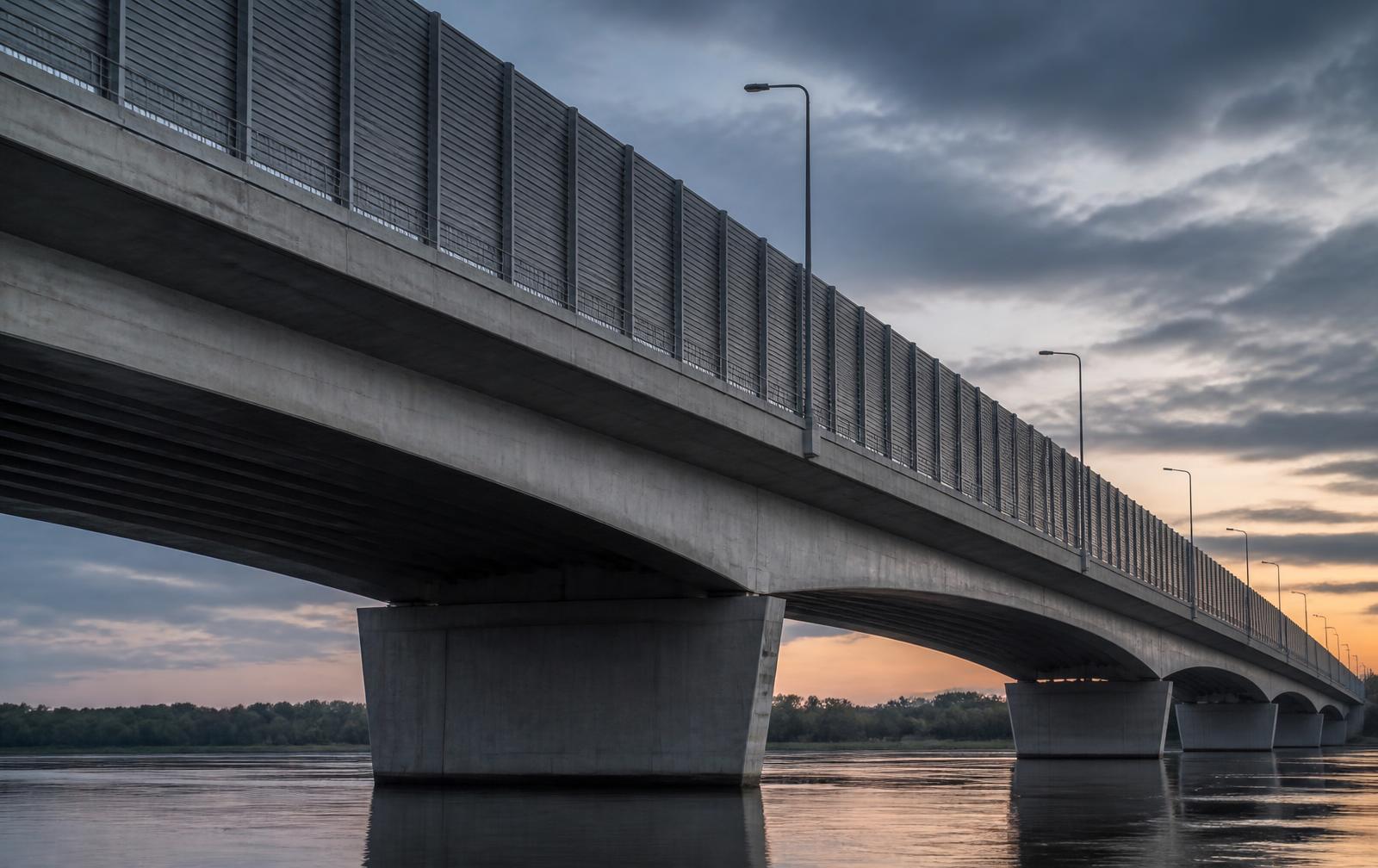
On a structure, added dead load is never free. Barrier weight travels into the parapet, the deck, the girders, and the substructure — and it can change the economics of a rehabilitation before the wall is even specified.
Typical challenges
- Limited load capacity on existing parapets and decks.
- Rehabilitation projects where added dead load may trigger structural upgrades.
- Difficult crane access and restricted staging on elevated work.
- Wind load and attachment detailing on structure-mounted runs.
Why system weight matters
Reducing barrier dead load can preserve capacity in the existing structure and keep a noise wall addition from cascading into strengthening work.
Less weight changes the entire project.
Infinity Wall System
System advantages
- Lower dead load applied to parapets, decks, and substructure
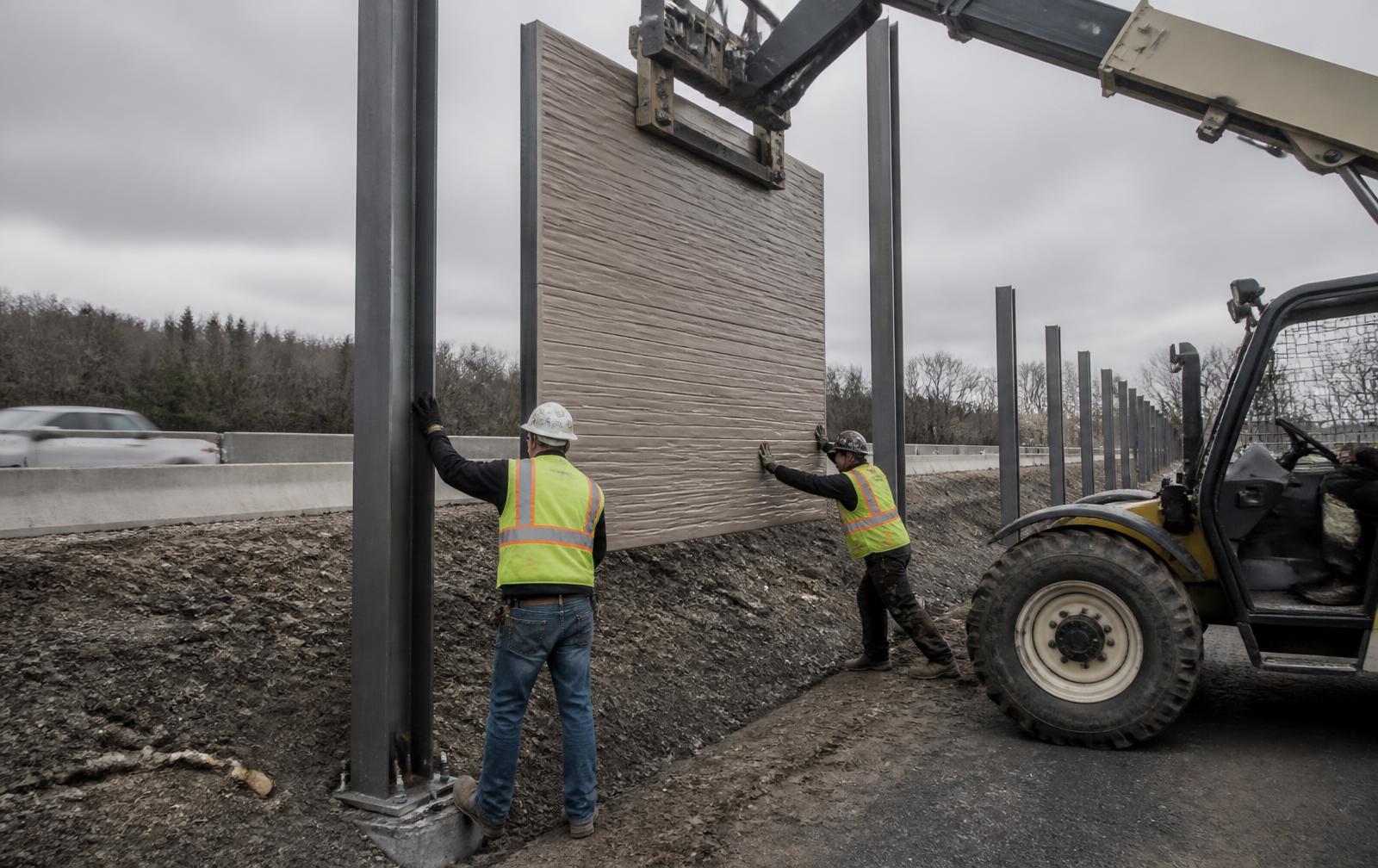
- Fewer picks and lighter equipment on elevated installations
- Reduced freight and staging footprint on structure sites
- Attachment detailing coordinated with the structural engineer of record
Design
Design considerations
- Parapet-mounted, deck-mounted, and retaining wall conditions
- Coordination with existing reinforcement and anchorage
- Wind and impact load considerations
- Aesthetic continuity between structure and approach walls
Example projects
Related resources
Specifications
Infinity Wall System — Guide Specification
Product Literature
Infinity Wall System — Product Data Sheet
Drawings
Typical Panel and Post Details
Drawings
Structure-Mounted Attachment Details
Talk With NWB
Have a noise wall project? Bring us in early.
Whether you're designing, estimating, specifying, or preparing to build, NWB can help evaluate whether the Infinity Wall System fits the project.